Stress & wellbeing · 5 min read
Sound and Burnout: Resonance, Research, and How You Feel After
What early research says about sound, mood and relaxation — and why your own before-and-after is the only metric that really counts.
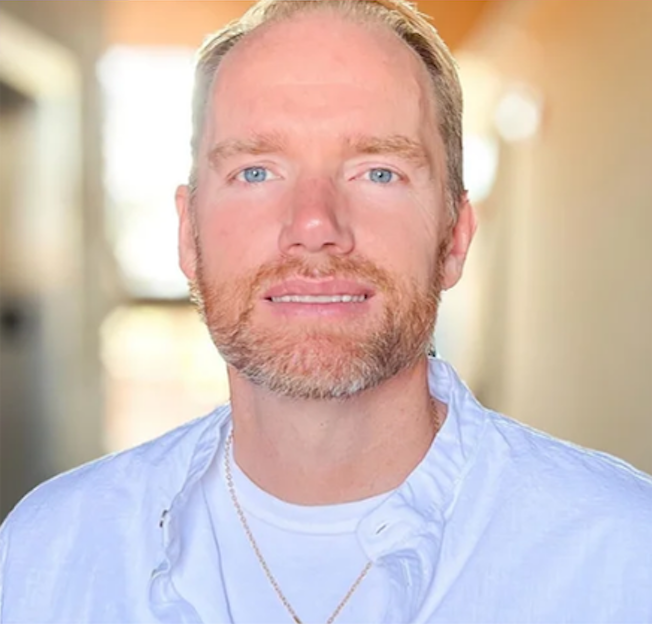
By Dan Vineyard
October 20, 2026
Picture your workday: ten browser windows, a hundred tabs in each, and a steady drizzle of pings, dings and "got a sec?" messages. Every sound is short, sharp and asking for something.
A soundbath is the opposite. Pure tones from crystal bowls ring out and keep ringing — long, smooth stretches of resonance that don't want a reply. Sound is kinetic energy, and for once that energy isn't attached to a deadline.
Burnout, as the World Health Organization describes it, is an occupational phenomenon tied to chronic workplace stress. While fixing burnout requires a comprehensive approach, we're here to offer something real, and hopefully something relaxing for thirty minutes that feel noticeably different from the other seven and a half hours.[1]
The only lab that matters: you
The research is genuinely interesting, and we'll get to it. But you don't need an EEG cap or a peer-reviewed paper to know whether your shoulders came down from your ears.
Here's the whole experiment: notice how you feel when you sit down and hear the first tones of the cyrstal. Notice how you feel when the last bowl fades. That's your data. It's the only study with a sample size of exactly you, and it never needs funding.
How did you feel before? How do you feel after? That's the result that matters.
What researchers have observed
A widely cited study by Goldsby and colleagues looked at singing-bowl sound meditation with a varied group of 62 adults. After the session, participants reported significant reductions in tension, anger, fatigue and depressed mood.[2]
One detail we love: people who had never tried this kind of meditation before showed especially strong positive effects. Beginners welcome — apparently, beginners thrive.[2]
It was an observational study without a control group, so it shows a positive connection rather than proof of cause. Still, it's a nice match for what many people describe in the room.
Brainwaves, rhythm and rest
Brainwave entrainment is the idea that steady rhythmic sound can nudge brain activity toward matching frequencies. Studies of rhythmic audio such as binaural beats have explored the alpha (8–13 Hz) and theta (4–8 Hz) ranges, which are associated with relaxed, meditative states.
Some of this research, including work by Yang and colleagues, has reported changes in markers like heart rate, blood pressure and cortisol. Those are signals linked to the parasympathetic "rest-and-digest" branch of the nervous system, which the vagus nerve helps run.[3]
Bowls aren't binaural-beat tracks, so think of this as a promising neighbour of what we do rather than a guarantee. The long, smooth waves of a bowl are at least a lot friendlier to that idea than a calendar alert.
Your ears, your throat, and a very long nerve
The vagus nerve has a small branch — the auricular branch — that reaches the outer ear. It's one reason some researchers are curious whether sound and vibration might gently encourage relaxation signals.
Low, resonant frequencies, often described in the 40–150 Hz range, are what you feel from deep bowls, gongs, humming and chanting. Many practitioners believe that resonance is part of why a session feels settling. The science is still young, and that's okay — you can still enjoy the hum.
A field that's still tuning up
Researchers are actively mapping how sound affects stress. A 2024 scoping review protocol by Saskovets and colleagues set out to gather the existing studies and identify the "active components" and possible neural mechanisms behind sound interventions for stress.[4]
Translation: smart people are taking this seriously, and the full picture is still being written. In the meantime, you're allowed to simply like how it feels.
Why 30 minutes at lunch
Thirty minutes fits between the standup and the 1:00. Lie down, sit back, camera off, and let the sound do the work — there's nothing to perform and nothing to get right.
Set your status to "In a meeting." Technically true. Then check in with yourself afterwards. If you feel lighter, you have all the evidence you need.
Sources & evidence
- World Health Organization (2019): Burn-out as an occupational phenomenon
Defines burnout as an occupational phenomenon in ICD-11. It does not evaluate soundbaths.
- Goldsby et al. (2016/2017): Effects of Singing Bowl Sound Meditation on Mood, Tension, and Well-being
Observational before-and-after study of 62 adults. Self-reported reductions in tension, anger, fatigue and depressed mood; stronger effects in participants new to this meditation. No control group.
- Yang et al.: research on low-frequency auditory stimulation and relaxation markers
Search link to related studies on binaural beats / entrainment and physiological markers. These studies used rhythmic audio, not singing bowls.
- Saskovets et al. (2024): Sound interventions and the stress response — scoping review protocol
A protocol describing a planned review of sound-intervention research and its possible mechanisms. It sets out a research plan rather than reporting results.
For general information, not medical advice. Soundbaths are a wellbeing activity, not an established treatment for burnout, anxiety, or other health conditions. Persistent symptoms deserve support from a qualified healthcare professional.